
Looking stylish does not always mean buying expensive clothes or following every new
fashion trend. In many cases, a simple outfit can look much more polished than an
expensive outfit when the clothes fit properly, the colors work together, and the overall
look is well maintained. On the other hand, even high-quality clothing can make an outfit
look messy when small styling mistakes are ignored.
7 Clothing Mistakes That Make Outfits Look Messy
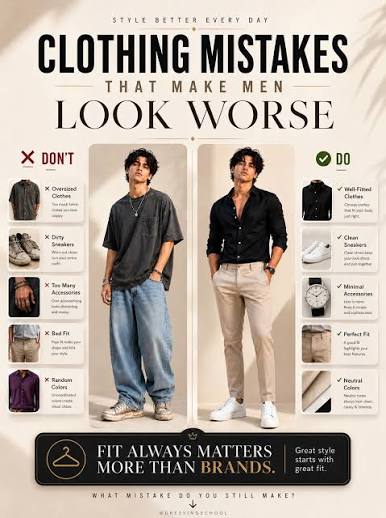
Your outfit is often the first thing people notice about you. Wrinkled shirts, poorly fitting
trousers, too many accessories, dirty shoes, or mismatched colors can make an otherwise
good outfit look unorganized. The good news is that these mistakes are easy to identify and
fix.
Whether you prefer casual streetwear, smart-casual clothing, office outfits, or minimalist
fashion, understanding a few basic styling principles can make a huge difference. You do not
need a huge wardrobe. You simply need to know how to combine and maintain the pieces
you already own.
Here are seven common clothing mistakes that can make your outfit look messy and how
you can avoid them.
Wearing Clothes That Do Not Fit Properly
- Wearing Clothes That Do Not Fit Properly
One of the biggest mistakes people make is wearing clothes that do not fit their body
correctly. Fit is one of the most important parts of looking well dressed.
Clothes that are too large can make your body look lost inside the outfit. An oversized T-
shirt can be stylish when intentionally chosen and balanced with the rest of the outfit, but
wearing a shirt that is simply too big can look careless. Similarly, trousers that are
excessively loose around the waist or legs can make an outfit appear untidy.
Clothes that are too tight can create a different problem. Tight shirts may pull around the
buttons, while tight trousers can create uncomfortable folds and wrinkles. Instead of
focusing only on the size written on the label, pay attention to how the garment actually
fits.
The shoulder seam of a shirt or jacket should generally sit close to your natural shoulder.
Trousers should sit comfortably around the waist without requiring constant adjustment. T-
shirts should give you enough room to move without looking shapeless.
If a good-quality garment is slightly loose or long, getting it altered by a tailor can
completely change its appearance. A small adjustment can make an affordable outfit look
considerably more refined.
- Ignoring Wrinkles and Clothing Condition
A beautiful outfit can immediately lose its polished appearance if the clothes are heavily
wrinkled. Wearing a wrinkled shirt to an important meeting, dinner, event, or even a casual
outing can make you appear less prepared.
Before leaving home, check the most visible areas of your clothing. Pay particular attention
to collars, sleeves, shirt fronts, trousers, and jackets.
You do not necessarily need to iron every item in your wardrobe every day. A garment
steamer can make removing wrinkles quick and convenient. Some fabrics also naturally
resist wrinkles, making them easier to maintain.
The condition of clothing matters too. Loose threads, missing buttons, stains, faded areas,
stretched collars, and damaged hems can make an outfit look messy even when the
individual pieces are fashionable.
Develop a simple habit of checking your outfit before wearing it. If something needs ironing,
cleaning, stitching, or replacing, deal with it before it becomes part of your outfit.
Clean and properly maintained clothing often looks more expensive than poorly maintained
designer clothing.
Wearing Too Many Colors at Once
- Wearing Too Many Colors at Once
Color can make an outfit interesting, but using too many unrelated colors can make the
overall appearance chaotic.
This does not mean you should wear only black, white, grey, and beige. Bright colors can
look excellent when used intentionally. The key is balance.
A simple approach is to build your outfit around one main color and use one or two
supporting colors. For example, a white T-shirt, blue jeans, and clean white sneakers create
a simple combination. You could add a black watch or belt without making the outfit feel
overloaded.
Neutral colors are especially useful because they work with many other shades. Black,
white, navy, grey, beige, cream, brown, and olive can form the foundation of a versatile
wardrobe.
If you are wearing a bold jacket, colorful sneakers, or a printed shirt, consider keeping the
remaining pieces relatively simple. This allows the statement piece to stand out instead of
competing with everything else.
The goal is not to eliminate color. It is to make every color look intentional.
Choosing the Wrong Shoes
- Choosing the Wrong Shoes
Shoes can completely change the appearance of an outfit. Unfortunately, they are also one
of the most commonly overlooked parts of styling.
A clean and well-fitted outfit can still look messy if the shoes are dirty, damaged, or
inappropriate for the occasion.
For example, extremely worn-out sneakers may not work well with a polished smart-casual
outfit. Similarly, formal shoes may look out of place with relaxed streetwear.
Your footwear should match the overall style of your clothing. Clean white sneakers can
work with jeans, chinos, shorts, and many casual outfits. Loafers or dress shoes can work
better for formal and smart-casual occasions.
Condition is just as important as style. Regularly clean your sneakers, remove visible dirt,
and replace shoes when they become heavily damaged. If you wear leather shoes,
appropriate cleaning and conditioning can help maintain their appearance.
Even inexpensive shoes can look stylish when they are clean and well maintained.
Overloading an Outfit With Accessories
- Overloading an Outfit With Accessories
Accessories can make a basic outfit more interesting, but too many accessories can create
visual clutter.
Wearing several chains, multiple rings, large bracelets, a prominent watch, sunglasses, a hat,
and other accessories at the same time may make the outfit feel crowded.
Instead, choose accessories based on the outfit and occasion. A simple watch and one
subtle chain may be enough for a casual look. For a more formal outfit, a classic watch, belt,
and minimal jewelry can create a polished appearance.
The same principle applies to bags. A clean, structured bag can complement an outfit, while
an overloaded or visibly damaged bag can make it look less organized.
Accessories should support your outfit rather than become the entire outfit.
A useful question to ask before leaving home is: “Does every accessory add something to
this look?” If the answer is no, removing one or two pieces may actually improve the outfit.
Mixing Too Many Patterns and Logos
- Mixing Too Many Patterns and Logos
Graphic clothing and logos can be fashionable, particularly in streetwear. However, wearing
several large logos or competing patterns together can make an outfit look unnecessarily
busy.
For example, a heavily printed shirt, patterned trousers, large-logo sneakers, and a
statement jacket may all be fashionable individually. Together, however, they can compete
for attention.
If you want to wear a printed or logo-heavy piece, allow it to become the main focus of your
outfit. Keep the other pieces relatively simple.
Patterns also need balance. Stripes, checks, florals, graphics, and other prints can
sometimes be combined successfully, but doing so requires more styling experience.
For everyday dressing, a simple rule works well: pair one noticeable pattern with neutral or
solid-colored pieces.
Minimal does not mean boring. A clean outfit with one interesting detail can often look
more fashionable than an outfit filled with competing designs.
- Wearing Clothes That Do Not Match the Occasion
One of the easiest ways to make an outfit look messy is wearing the wrong level of formality
for the situation.
Clothing should make sense for where you are going. Wearing gym clothes to a formal
dinner or an extremely formal outfit to a relaxed gathering can make you feel out of place.
Before choosing your clothes, consider the location, time, weather, event, and expected
dress code.
For a casual day, jeans, a clean T-shirt, sneakers, and a simple overshirt may work well. For a
smart-casual occasion, chinos, a polo or button-down shirt, and loafers or clean minimal
sneakers can be appropriate. Formal events generally require more structured clothing such
as a suit, dress shirt, or formal trousers depending on the dress code.
You should also consider weather and comfort. Wearing inappropriate layers or heavy
clothing in hot weather can make you appear uncomfortable and can affect the way your
clothes sit.
Dressing appropriately does not mean following strict fashion rules. It means understanding
the environment and making your outfit look intentional.
What Is the 7 Rule in Fashion?
What Is the 7 Rule in Fashion?
The 7 rule in fashion is commonly associated with the idea that an outfit can be evaluated
by the number of visually distinct elements it contains. Depending on who is explaining the
concept, the exact interpretation can vary, so it is better viewed as a styling guideline rather
than a strict fashion law.
The general idea is to think about the different components of an outfit, including clothing
pieces, shoes, accessories, and noticeable details. The purpose is to create enough visual
interest without making the outfit look overwhelming.
For example, an outfit might include a T-shirt, trousers, sneakers, jacket, watch, sunglasses,
and a bag. These elements can create a complete look without requiring excessive
accessories.
However, counting items should not become an obsession. A minimalist outfit with fewer
pieces can look fantastic, while a layered outfit with more pieces can also work when
everything is balanced.
The most useful lesson behind fashion rules like this is intentional styling. Instead of
randomly adding items, think about what each piece contributes to the outfit.
If your outfit already contains a bold jacket and statement sneakers, you may not need
several eye-catching accessories. If your clothes are simple, a watch, necklace, bag, or
interesting footwear can add personality.
Use fashion rules as guidelines, not restrictions.
What Makes a Woman Look Rich?
What Makes a Woman Look Rich?
Looking wealthy or polished is not necessarily about wearing expensive designer brands. In
fashion, a refined appearance usually comes from fit, quality, grooming, simplicity, and
consistency.
One of the biggest factors is clothing fit. A well-fitted blazer, trousers that sit correctly, and a
shirt with the right proportions can create a sophisticated appearance regardless of the
price.
Neutral colors can also create an elegant look. Shades such as cream, white, navy, black,
camel, grey, and chocolate brown are easy to combine and often create a timeless
appearance.
Fabric and condition matter as well. Clothes do not have to be extremely expensive, but
they should look clean, cared for, and appropriate for the occasion. Removing wrinkles,
dealing with loose threads, and keeping shoes clean can make a noticeable difference.
Minimal accessories can also look sophisticated. Instead of wearing numerous statement
pieces, choosing a simple watch, structured handbag, delicate jewelry, or quality-looking
belt can make an outfit feel more intentional.
Another important factor is avoiding excessive branding. Large logos do not automatically
make an outfit look luxurious. Sometimes a simple, well-constructed garment without a
visible logo can create a more elegant appearance.
Finally, confidence matters. A polished outfit works best when the person wearing it feels
comfortable. Good posture, neat grooming, and confidence can contribute significantly to
the overall impression.
The same principle applies to men’s fashion too: looking expensive is often more about
presentation than price.
What Is the 3-3-3 Rule for Clothes?
The 3-3-3 rule for clothes is a simple wardrobe and styling concept that can help people
create multiple outfits with a limited number of clothing pieces.
One popular interpretation involves selecting three tops, three bottoms, and three pairs of
shoes and using them to create different combinations. For example, you might choose
three T-shirts or shirts, three pairs of trousers or jeans, and three pairs of shoes.
The advantage of this approach is that it encourages versatility rather than unnecessary
shopping.
Imagine you have:
- Three tops: white T-shirt, black polo, and blue shirt
- Three bottoms: blue jeans, black trousers, and beige chinos
- Three shoes: white sneakers, black sneakers, and loafers
These nine pieces can be combined in numerous ways, giving you many different outfits
without needing a huge wardrobe.
The 3-3-3 approach is particularly useful when travelling, creating a capsule wardrobe, or
trying to reduce unnecessary clothing purchases.
It also teaches an important fashion lesson: versatility is more valuable than quantity.
Before buying a new piece of clothing, think about how many existing items it can work
with. If a new shirt only matches one pair of trousers, it may not be as useful as a shirt that
works with several bottoms.
How to Make Every Outfit Look Cleaner and More Polished
Once you avoid the seven mistakes above, you can take your styling a step further with a
few simple habits.
First, plan your outfit before putting it on. Think about the overall color combination and
whether the pieces belong to the same style category.
Second, pay attention to proportions. If you wear a loose top, a more structured or fitted
bottom can create balance. If you choose wide-leg trousers, consider how the top and
footwear complement their shape.
Third, maintain your wardrobe. Fold or hang clothing properly, wash garments according to
their care instructions, clean your shoes, and repair small problems before they become
major ones.
Fourth, keep your accessories intentional. A watch, belt, sunglasses, necklace, or bag can
add personality, but you rarely need every accessory you own at the same time.
Finally, remember that fashion is personal. Trends change constantly, but clean clothing,
good fit, appropriate styling, and confidence never really go out of style.
7 Clothing Mistakes That Make Outfits Look Messy
Introduction:
Do your outfits sometimes look untidy, even when you wear stylish clothes? These 7 clothing mistakes that make outfits look messy could be the reason. From poorly fitted clothes to mismatched colours, small styling errors can affect your entire look. The good news is that a few simple changes can help you look polished and put-together.
7 Clothing Mistakes That Make Outfits Look Messy
Understanding the 7 clothing mistakes that make outfits look messy can help you improve your everyday style. Avoiding these common errors will make your outfits look cleaner, more balanced, and more intentional.
1. Wearing Ill-Fitting Clothes
Clothes that are too tight or too loose can make an outfit look unbalanced. Choose pieces that fit your body comfortably and create a neat silhouette.
2. Ignoring Wrinkles and Creases
Wrinkled clothing can make even an expensive outfit look untidy. Iron or steam your clothes before wearing them.
3. Mixing Too Many Colours and Patterns
Too many competing colours and prints can make an outfit look cluttered. Start with a simple colour palette and add one statement piece.
Final Thoughts
Avoiding these 7 clothing mistakes that make outfits look messy can help you create a more polished personal style. Focus on good fit, neat clothing, balanced colours, and thoughtful accessories. Remember, looking stylish is not about buying more clothes. It is about wearing what you own with confidence.
Final Thoughts
Looking stylish does not require a wardrobe full of expensive clothing. Often, the biggest
improvement comes from avoiding simple mistakes. Clothes that fit properly, clean
footwear, coordinated colors, minimal accessories, and wrinkle-free garments can instantly
make an outfit look more polished.
Fashion rules such as the 7 rule and 3-3-3 rule can provide useful starting points, but they
should not limit your personal style. Use them as tools to understand balance, versatility,
and proportion.
Whether you are dressing for college, work, a casual day out, a party, or a special occasion,
focus on making every piece look intentional. A simple outfit that is clean, well-fitted, and
thoughtfully styled will almost always look better than an expensive outfit that is
overloaded or poorly maintained.
The best fashion habit is simple: wear less clutter, choose better combinations, maintain
your clothes, and wear everything with confidence.